
Role Player's Digest #6
June 29, 2026
Welcome to the 6th edition of Role Player’s Digest. We have a great feature article from Kate Korsaro for you, as well as some links to more role playing inspiration.
Index
Feature Article
The Combat Paradox: Reconciling Wargaming Roots with OSR Philosophy by Kate Korsaro
Announcements
Zine 3 (Free Add-on) for Under the Fourth Kingdom Released by Kerova
Playthroughs
Salvage at Salvation Point Part 1: An Alien Evolved Edition Lone Survivor Actual Play by Adam Wright
Machine Gods of the Noxian Expanse Actual Play by Alone in the Realm
Delta green/Omen gme: ”911, this is an emergency” by Threads & Throws
Robert, the Inner Warmth Paladin by Jordan Woosley
Podcasts and Videos
Iron Vault Demystified by Oathbound Soliloquy
Resources
Logging Your Ironsworn Campaign: A Lonelog Guide by Oathbound Soliloquy
Ashgrave: Exploring a Procedurally Generated Dungeon with Undaunted by Sebastian Grabne
The Secret Weapon for Serial Writers, Novelists, and Game Masters: NotebookLM by Niamh Celeste
TTRPG Design
Backstory or Backbone? Give your character something to stand on by GMaia
Why Great Games Die In The Backlog by Kaben
Fiction Engines, Pressure Engines, and World Engines by Roberto Bisceglie
How to Create a Character You’ll Still Love After 20 Sessions by Jasper C. Lock, Tabletop Toolkit
Thinking Aloud About Game Design by Paul Walker
Feature Article
The Combat Paradox: Reconciling Wargaming Roots with OSR Philosophy
by Kate Korsaro
The Doctrine of Avoidance
Welcome to the great OSR identity crisis. If you’ve spent any time in the old-school community, you’ve likely heard the refrain: “Combat is a failure state.” It’s a foundational pillar of the philosophy, preached with the fervor of a desert monk. We tell our players that the real game isn’t about how many hit points they can chew through, but how much gold they can extract without ever drawing a blade. Yet, paradoxically, many of us spend our downtime crafting incredibly intricate, granular, and mathematically dense combat systems. We tell players to avoid the fight, but we build them a tactical sandbox so tempting they can’t help but jump in. To understand why this tension exists, we first have to look at the ideological bedrock of the movement: the belief that combat is where the player’s agency goes to die.
The Failstate Manifesto
In the traditional OSR mindset, combat is not the climax of a well-played session; it is the messy, loud, and often unnecessary consequence of a player’s mistake. If you have spent the last three hours meticulously navigating a trap-filled corridor, bribing low-level guards, and using shadows to mask your movement, the sudden transition into a high-stakes tactical skirmish feels less like a “win” and more like an “oops.” In this light, combat is the “failstate”—the point where the players’ ingenuity has run dry, their preparations have crumbled, and they have been forced to rely on the blunt instruments of iron and magic.
The manifesto of the avoidance-oriented player is centered on the idea that the “real” game happens in the margins. The real game is the negotiation with the merchant, the clever use of a heavy stone to trigger a pressure plate from a distance, or the decision to simply leave the treasure behind because the sentry count is too high. When a party engages in combat, they are essentially admitting that their options have narrowed. They have moved from a state of infinite possibility—where they could talk, bribe, sneak, or bypass—into a binary state of “hit or be hit.” For a certain breed of old-school enthusiast, the moment the Referee calls for initiative, a little part of the player’s agency has already been stripped away, replaced by the raw, unrefined necessity of survival.
Agency vs. The Dice
This brings us to the inherent friction between player intent and the cold, indifferent rolling of the dice. In a truly player-driven game, the players should be able to look at a situation and propose a solution that relies on their character’s utility and their own wit. However, OSR combat is famously lethal and famously swingy. A single well-placed critical hit from a goblin could theoretically end a veteran adventurer’s career, regardless of how “smart” the player’s tactical positioning was.
This creates a profound tension regarding agency. On one hand, players want their decisions to matter. They want to feel that their choice to use a smoke bomb or a heavy shield is a meaningful contribution to the outcome. On the other hand, the high-lethality nature of the system introduces a level of randomness that can feel like a direct assault on that agency. When the dice decide the outcome of a confrontation through a sudden, catastrophic roll, the player’s previous “planning” can feel like an illusion. This is where the doctrine of avoidance becomes a survival mechanism. If the dice are going to be this unpredictable and this deadly, the most rational, “pro-agency” move is to never roll them in the first time. By avoiding the combat, the players are attempting to reclaim control from the chaos of the dice, seeking to replace the randomness of the combat loop with the more deterministic outcomes of environmental and social manipulation.
The Cost of Engagement
Finally, we must consider that combat in an OSR setting is never a “free” encounter. It is an expensive transaction, and the currency is rarely just hit points. Every skirmish, no matter how much the players “win” it, incurs a systemic cost that ripples through the rest of the adventure. This is the attrition of the dungeon crawl. When a fight breaks out, it isn’t just the characters’ health that is at risk; it is their resources.
Think of the utility of a spellcaster or the utility of a well-equipped thief. A combat encounter consumes spell slots, burns through precious torchlight, depletes rations, and leaves the party’s most valuable tools—their specialized gear—potentially broken or lost. This creates a mounting pressure of resource depletion. A “victory” against a group of orcs might leave the party so depleted that they lack the light to see the next trap or the magical energy to bypass the next magical seal.
This systemic risk turns every combat into a strategic gamble. The players aren’t just weighing the risk of death; they are weighing the risk of “structural failure” for the remainder of the delve. This is why the doctrine of avoidance is so much more than just a way to avoid dying; it is a way to preserve the party’s ability to interact with the game’s other systems. To fight is to spend; to avoid is to save. In the economy of the dungeon, the most successful players are those who realize that the most devastating way to lose a fight is to win it, but leave themselves too exhausted to ever truly succeed at the adventure.
The Wargamer’s Inheritance
Even the most dedicated OSR purist, the kind of player who spends their weekends preaching the virtues of “avoidance over engagement” and “narrative over numbers,” likely harbors a small, shameful secret: they secretly love a good, crunchy combat encounter. There is a profound, almost contradictory tension between our ideological commitment to the idea that “combat is a failure state” and our genuine-to-god excitement when a well-placed modifier or a clever tactical maneuver results in a spectacular, dice-driven resolution. We claim to want to bypass the slog of the battlefield, yet we spend our prep time meticulously designing the very mechanical gears that make that battlefield spin.
The Genetic Code of Grids
To understand why we can’t seem to shake the tactical impulse, we have to look at the ancestry of our hobby. Long before the first dungeon crawl was ever mapped, there were wargames stiff, disciplined, and intensely preoccupied with the precise measurement of distance, the visibility of terrain, and the logistical nightmare of troop movement. When the foundations of the RPG were laid, they weren’t built on pure improvisational theater; they were built on the bones of these miniature-based combat simulations. We didn’t just inherit the dragons and the dungeons; we inherited the very concept of the “unit” and the “grid.”
Even when we attempt to strip away the tactical map in favor of “theater of the mind,” the ghost of the wargamer lingers in our every instruction. We talk about “lines of sight,” “zones of control,” and “range increments.” We use language that assumes a spatial reality governed by the physics of a tabletop miniature. This genetic code is incredibly resilient. Even in the most lightweight, narrative-focused OSR titles, there is a structural DNA that expects players to respect the geometry of the room. We are, at our core, descendants of the hobbyists who once sat over felt mats and hex maps, and that legacy provides a fundamental sense of “where” and “how” that is difficult to erase, no matter how much we emphasize player ingenuity over tactical positioning.
The Dopamine of the Crunch
There is a specific, visceral kind of satisfaction that comes from “the crunch”—that moment when a series of modifiers, environmental factors, and character abilities coalesce into a single, mathematically decisive roll. It is the “guilty pleasure” of the TTRPG experience. While we intellectually argue that combat should be a breakdown of player agency, we cannot deny the dopamine hit that occurs when a player says, “Because I’m using the heavy shield, and the light is dim, and I’m flanking, I have a +3 to my roll.”
This complexity isn’t just “math for the sake of math.” It provides a tangible, granular sense of impact. In a purely narrative system, success can often feel like a mere concession by the Referee. But in a system with mechanical depth, success feels earned through the mastery of the game’s internal logic. There is a thrill in the calculation, a feeling that the players are interacting with a complex, living machine. When the dice tumble and the math checks out, the players feel a sense of agency that is purely mechanical, yet deeply rewarding. It is the satisfaction of the engineer seeing the gears lock into place. We call it “the slog” when we’re being philosophical, but when we’re actually playing, that complexity provides a textured, tactile layer of engagement that makes the world feel “real” in a way that pure prose cannot always achieve.
Complexity as a Safety Net
Finally, we must acknowledge the practical, almost defensive, utility of robust rules. As a Referee, you often find yourself in the eye of a storm of player chaos. OSR players are notorious for attempting the impossible: they will try to bribe a gelatinous cube with a vintage bottle of wine, or attempt to use a localized thunderstorm to short-circuit a magical ward. These are brilliant, player-driven moments that define the genre, but they also present a massive problem for the person running the game. Without a framework of established rules, the Referee is left with nothing but arbitrary fiat, which can quickly lead to resentment or the feeling that the “rules” are just the Referee’s whims in disguise.
Complexity, in this context, serves as a vital safety net. Detailed combat rules and robust mechanical interactions provide a structural anchor for the game’s reality. When the players push the boundaries of what is possible, the rules provide a standardized language for resolution. A complex system allows the Referee to say, “That is a brilliant idea, and here is the mechanical cost/risk associated with it.” The rules act as the physics of the game world. They provide a predictable, if difficult, boundary that prevents the game from dissolving into unmanageable, ungrounded improvisation. In the heat of a chaotic session, the “crunch” isn’t a burden; it is the scaffolding that keeps the narrative from collapsing under the weight of its own creativity. It provides the Referee with the tools to adjudicate the absurd with a sense of fairness and consistency.
Harmonizing the Paradox: Synthesizing avoidance and engagement into cohesive game design
If the previous sections have left you feeling like a person trying to hold a handful of wet sand, please accept my apologies. We are attempting to reconcile two fundamental, and often conflicting, impulses in our hobby: the desire to play a high-stakes game of wits where the players outsmart the environment, and the deep-seated, nerdy urge to move tiny plastic miniatures across a grid with mathematical precision. It is a bit of a headache, isn’t it? We want the “Old School” ethos of player ingenuity, but we also want the “Wargame” satisfaction of a well-executed tactical maneuver. However, the solution isn’t to choose one and discard the other. The magic happens when we stop treating combat and exploration as separate modes of play and instead start treating combat as the inevitable, heavy cost of failing to manage the encounter.
Combat as Consequence
To resolve the paradox, the Referee must shift their perspective on what an “encounter” actually is. In many modern-leaning games, an encounter is a discrete event that begins with a roll for initiative and ends when the last monster is dead. In a harmonized OSR approach, the encounter begins the moment the players catch a whiff of something stinking in the dark or hear the heavy rhythmic clanking of plate armor around the corner. The “combat” is simply the mechanical way the game handles the players’ failure to negotiate, bypass, or outmaneuver that threat.
Designing encounters as “consequences” means treating the environment as a loaded spring. If the players decide to charge into a room filled with kobolds, the combat shouldn’t just be a test of their combat stats; it should be a test of their failure to notice the tripwires they ignored during exploration. The combat becomes a “bill” that has finally come due. The Referee isn’t presenting a combat encounter; they are presenting a situation that is rapidly deteriorating because the players’ previous choices have left them with no other option. When players realize that the reason they are currently rolling for initiative is because they were too greedy to bribe the gatekeeper, the combat loses its status as a primary goal and gains its status as a systemic penalty.
Maintaining the Tensions
If we want players to avoid the meatgrinder, we have to make the “non-combat” tools just as mechanically interesting as the “combat” tools. It is a mistake to think that providing a way to bypass a fight is enough; the Referee must also provide the mechanical weight that makes fighting a terrible idea. This is where the “crunch” of the wargaming heritage can actually serve the OSR philosophy.
We can use detailed rules not to make combat more frequent, but to make it more daunting. Instead of just having a “Stealth” check, use the complexity of the rules to create a “Tension System.” Perhaps the heavy clanking of the fighter’s armor creates a “noise threshold” that the Referee tracks. If the players move too quickly or too loudly, the threshold is breached, and the “consequence” (combat) is triggered. Use the tactical elements—visibility, terrain, light sources, and line-of-sight—to create a landscape where the players’ survival depends on their ability to manipulate the environment.
The goal is to use the “crunch” to reward cleverness. If a player uses a well-placed smoke bomb or a cleverly timed lever pull to bypass a room, the mechanics should recognize that as a significant tactical achievement. By providing robust rules for environmental interaction, the Referee ensures that the “Third Option”—the solution that isn’t fighting or running—is the most mechanically rewarding path. The complexity shouldn’t be a distraction; it should be the very toolkit the players use to avoid the dice-heavy nightmare of a prolonged melee.
Reclaiming the Pleasure
Now, let us address the elephant in the room: when the swords are drawn, we still want it to be fun. We shouldn’t be so afraid of combat that we turn the game into a dry, bloodless debate. When the players have finally been cornered, when their plans have crumbled, and when the only thing left to do is swing steel in a desperate bid for survival, the game should transition into that high-stakes, tactical climax we all secretly crave.
The “pleasure” in combat comes from the narrative and mechanical release of tension. If the players have spent the last hour navigating a high-tension environment, carefully managing their light and noise, the sudden eruption of combat feels earned. It is the explosive conclusion to a period of intense pressure. In this moment, the wargaming roots can shine. The tactical grid, the detailed weapon properties, and the gritty, lethal math serve to heighten the stakes. The “crunch” provides the visceral impact that makes the players feel the weight of every missed swing and the terror of every incoming blow.
By treating combat as a high-stakes narrative climax, we respect the OSR philosophy of avoiding combat as a primary loop, while still embracing the wargamer’s love for tactical depth. We aren’t playing a game of “how much damage can I do?”; we are playing a game of “how do I survive the catastrophe I have inadvertently triggered?” When the Referee achieves this balance, combat ceases to be a repetitive mechanical loop and becomes a legendary, terrifying, and ultimately satisfying part of the player’s struggle against the dungeon.
Kate has been rolling funny-shaped dice and doing THAC0 math since the halcyon days of AD&D 2e, but lately, she’s hopelessly addicted to the lethal, rulings-over-rules charm of the OSR. When she isn’t actively trying to keep her squishy, low-level adventurers out of spike pits, she’s an aspiring game designer—or possibly a writer? The final career decision is still pending, which makes perfect sense given her ultimate superpower: the ability to enthusiastically launch a hundred brilliant creative projects and finish absolutely none of them. If you need her, she’ll be warmly welcoming you to her table while happily brainstorming her fifteenth unfinished dungeon module!
Announcements
Zine 3 (Free Add-on) for Under the Fourth Kingdom Released by Kerova — This 19 page Zine features 4 New PC Backgrounds, 2 New Depths and 3 New Scourges.
Playthroughs
Salvage at Salvation Point Part 1: An Alien Evolved Edition Lone Survivor Actual Play by Adam Wright — This is part one of my ongoing Alien Evolved Edition Lone Survivor Actual play. Read along to follow the adventures of Tennessee Briggs and see how long he and his crew survive.
Machine Gods of the Noxian Expanse Actual Play by Alone in the Realm — A remnant of humanity survived the cataclysm, and ancient AI systems are now revered as gods. Follow in the footsteps of a lowly librarian, Cor, as he searches the ruins of humanity for artifacts...and the truth.
Delta green/Omen gme: ”911, this is an emergency” by Threads & Throws — First part of my Delta green/Omen gme playrhrough
Robert, the Inner Warmth Paladin by Jordan Woosley — An actual solo play of Tome of the Pyromancer. An ongoing series as I play the Dark Souls inspired TRPG.
Podcasts and Videos
Iron Vault Demystified by Oathbound Soliloquy — If you've ever wanted to turn Obsidian into a VTT to play Ironsworn but the learning curve feel intimidating, now's your chance. I've recorded 8 videos detailing how to install Obsidian & Iron Vault, and how to get started.
Resources
Logging Your Ironsworn Campaign: A Lonelog Guide by Oathbound Soliloquy — How do you use Lonelog notation with something like Ironsworn? Read this article, it explains everything with detailed examples of moves, oracle rolls and progress tracks, as well as how to create and track NPC's.
Ashgrave: Exploring a Procedurally Generated Dungeon with Undaunted by Sebastian Grabne — Using the dungeon generation mechanics from Undaunted, the dedicated solo rules for Adventurous, I created Ashgrave. This post describes the process, and contains a map of the dungeon, drawn using Dungeon Scrawl. It is meant as inspiration for solo players, to show what kind of dungeons you can explore with Undaunted.
The Secret Weapon for Serial Writers, Novelists, and Game Masters: NotebookLM by Niamh Celeste — NotebookLM holds my World Bible. It knows everything about my world, my story, my characters, and my plot. Anything I forget, it remember. Some software claims to be your second brain. NotebookLM actually delivers on that promise.
TTRPG Design
Backstory or Backbone? Give your character something to stand on by GMaia — A dissertation about the (fake) myth of characters without backstory in the OSR model.
Why Great Games Die In The Backlog by Kaben — The tabletop market is overflowing with interesting games, and most of them will never make it to a table. Not because they are bad, but because getting bought and getting played are two very different things.
Fiction Engines, Pressure Engines, and World Engines by Roberto Bisceglie — This article is not a ranking. It is not a polemic against any design tradition. It is an attempt to map the actual terrain of contemporary RPG paradigms using a single, concrete question: where does the game place its engine of play?
How to Create a Character You’ll Still Love After 20 Sessions by Jasper C. Lock, Tabletop Toolkit — A short guide to creating TTRPG characters who stay fun beyond the first few sessions, with simple ideas for motives, relationships, and room to grow.
Thinking Aloud About Game Design by Paul Walker — I'm designing a solo TTRPG. And I'm doing it right out in the open. Here is the contents page for my series "Thinking Aloud About Game Design" with links to everything I've been doing in it! Keep an eye out, there is a lot more to come...
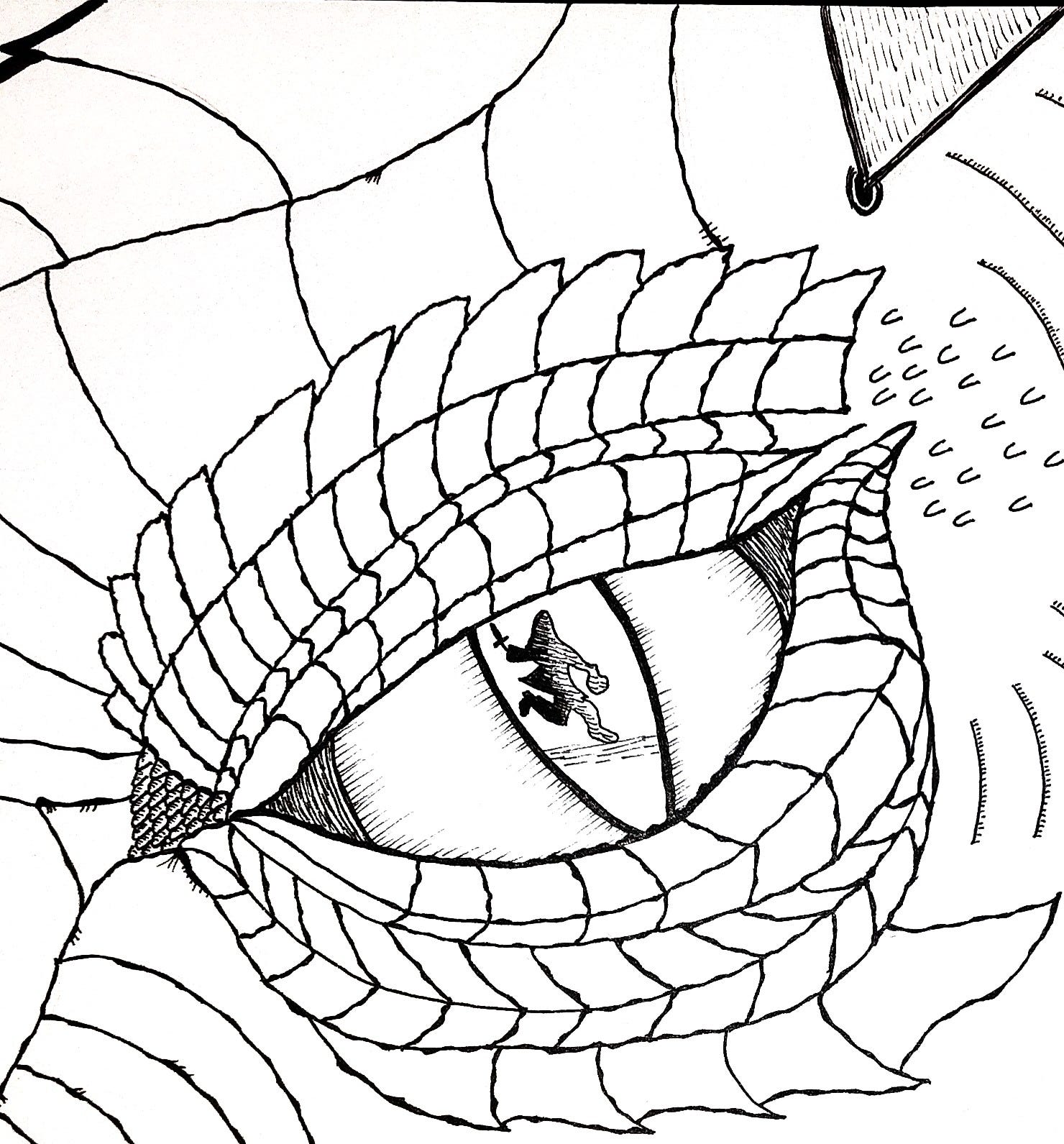
We hope you enjoyed The Role Player’s Digest. If you’d like your work to appear in the July 2026 edition of The Role Player’s Digest, please submit your articles, art, reviews, GM tips, or anything else having to do with role playing to us here by Friday July 24. In the meantime, May the Dice be With You!
Another great digest! I loved the art submitted in this edition!
Excellent issue! Great articles and art!